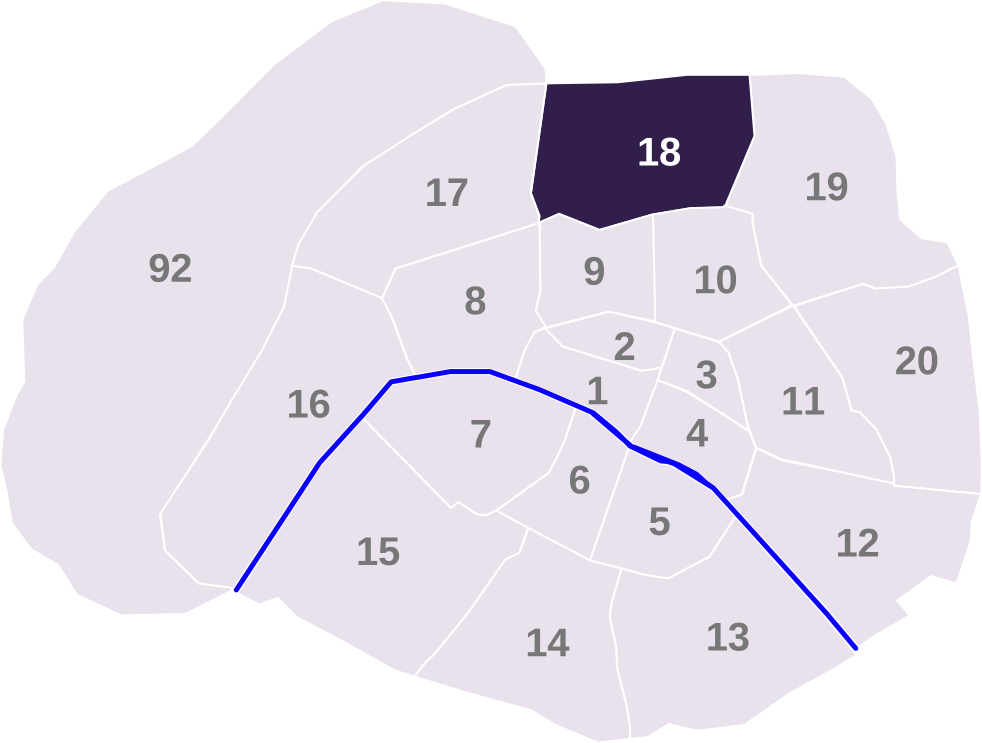





Montmartre, the legendary hill For an intense experience of Paris, etched into the collective memory since the 19th century, you can't do better than renting a vacation apartment in Montmartre. Where art and religion meet At more than 425 feet high, the hill of the Butte Montmartre, the highest point in Paris, is a site that is truly symbolic of Paris. It is the point where working class Paris and artistic Paris meet, with an extraordinary religious structure, the Sacré-Coeur, in the center. Half-city, half-village, and sitting above Paris, Montmartre has inspired painters since the 19th century. Pissarro, Van Gogh, Picasso, and Toulouse-Lautrec loved to spend time here in search of inspiration and share their ideas over a drink on the café terraces. From the Abbesses to ..
Read more
Montmartre
Montmartre, the legendary hill For an intense experience of Paris, etched into the collective memory since the 19th century, you can't do better than renting a vacation apartment in Montmartre. Where art and religion meet At more than 425 feet high, the hill of the Butte Montmartre, the highest point in Paris, is a site that is truly symbolic of Paris. It is the point where working class Paris and artistic Paris meet, with an extraordinary religious structure, the Sacré-Coeur, in the center. Half-city, half-village, and sitting above Paris, Montmartre has inspired painters since the 19th century. Pissarro, Van Gogh, Picasso, and Toulouse-Lautrec loved to spend time here in search of inspiration and share their ideas over a drink on the café terraces. From the Abbesses to Place du Tertre, the artistic atmosphere is pervasive. Caricaturists and other amateur painters try to maintain a tradition that sometimes seems nothing more than a tourist industry. An abundance of treasures The best way to explore Montmartre is by walking around or taking the cable car to really soak up the unique atmosphere of this corner of the capital. However, there are some things that really should not be missed. First, the Basilique du Sacré-Coeur and its three byzantine-inspired domes. It was symbolically erected on the spot where the Communards' Revolt began. It was supposed to atone for the sins that led to the divine punishment of the French defeat by Prussia in 1870. Behind the imposing structure, the more modest Eglise Saint-Pierre and Eglise Saint-Jean are not to be missed. Montmartre is also known for its theaters: the Abbesses theater, the Manufacture des Abbesses, La Cigale, Le Trianon, the Elysée Montmartre, and the Boule Noire. The Boule Noire is reminiscent of the cabarets of the 19th century. On the same note, the Lapin Agile and especially the Chat Noir are other popular venues. To find out more about the neighborhood and the artists who frequented it, the Musée de Montmartre, Erik Satie's house, the Espace Dali, and Dalida's house reveal many secrets. Local stores in Montmartre For those who love textiles, the Saint-Pierre market is the place to go. For eating, the hill is swarming with restaurants and little brasseries. On the other hand, there are more shops on either side of the hill. Metro connections are available throughout the area at the Abbesses (line 12), Pigalle (lines 2 and 12), Lamarck-Caulaincourt (line12), and Château Rouge (line 4) stations.